How Dirty Filters and Low Refrigerant Make Your AC Run Longer
JMAC Plumbing and Air Conditioning
Discover how dirty filters and low refrigerant make your AC run longer in Las Vegas heat and learn quick fixes to restore efficiency.
How Dirty Filters and Low Refrigerant Make Your AC Run Longer
Why Dirty Filters and Low Refrigerant Make Your AC Run Longer in Las Vegas
Understanding how dirty filters and low refrigerant make your ac run longer starts with two simple facts: your AC needs clean airflow and the right amount of refrigerant to cool your home efficiently. When either one is off, your system can't complete a normal cooling cycle — and it keeps running trying to make up the difference.
Here's a quick breakdown of what's happening:
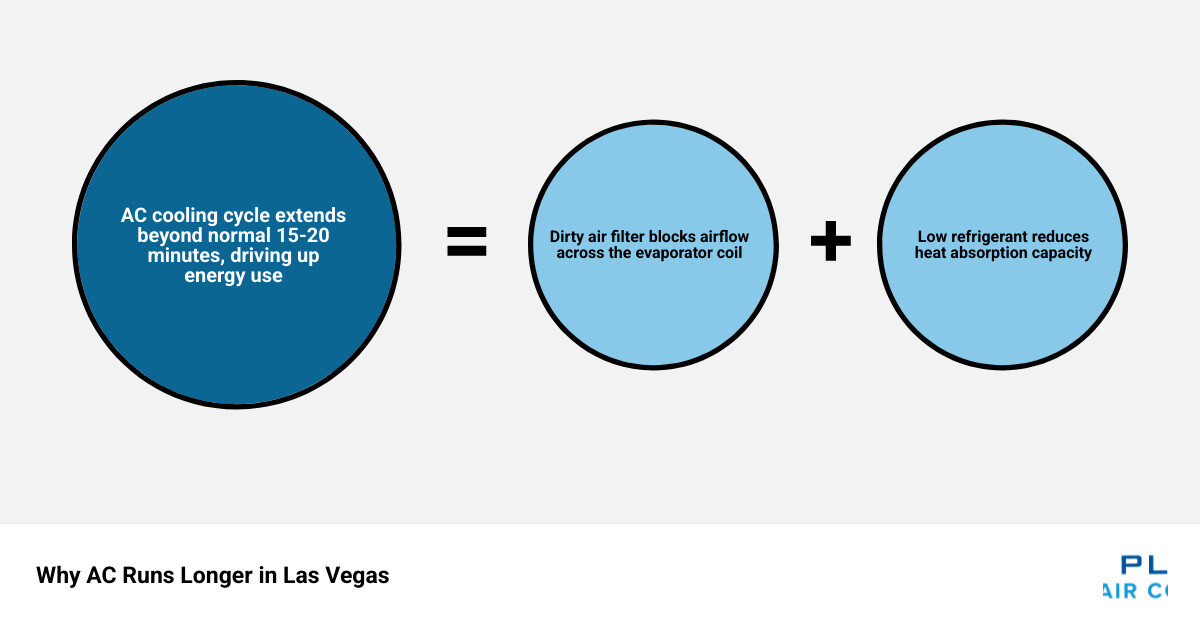
- Dirty filter: Blocks airflow across the evaporator coil, so the system can't pull enough warm air in to cool it down — the AC just keeps running, never reaching your set temperature
- Low refrigerant: Reduces the system's ability to absorb heat, so even with good airflow, the cooling capacity drops — again, the AC runs longer trying to hit a temperature it can't reach
- Both problems together: Can cause the evaporator coil to freeze over, which completely stops heat transfer and forces the system into a cycle of nonstop operation or shutdown
A normal AC in Las Vegas should run a cooling cycle of roughly 15 to 20 minutes before shutting off. If yours seems to run constantly — especially during the June heat — a clogged filter or refrigerant issue is one of the most likely causes.
I'm Stephen Schmid, and after years in the HVAC industry focused on helping homeowners understand exactly how dirty filters and low refrigerant make your ac run longer (and more expensive to operate), I've seen these two issues account for a large share of preventable service calls. In the sections below, I'll walk you through how each problem works, how to tell them apart, and when it's time to call a professional.
Understanding the Typical AC Cooling Cycle in Las Vegas
When our air conditioning systems are operating in peak condition, they do not run continuously. Instead, they operate in structured intervals known as cooling cycles. A typical, healthy AC cycle should last between 15 and 20 minutes. Under normal conditions, your system will cycle on and off two to three times per hour to maintain your desired thermostat settings.
However, Las Vegas summers are anything but normal. When outdoor temperatures climb into the triple digits, your system naturally has to work harder. The temperature difference between the scorching Nevada air outside and your comfortable indoor sanctuary means heat infiltrates your home much faster. To combat this, cycles will naturally run a bit longer during the hottest hours of the day.
Even with extreme desert heat, an AC should still cycle off once it satisfies the thermostat. If your system is running for 40, 50, or 60 minutes straight—or worse, running continuously without ever shutting down—it is a clear warning sign of an underlying issue. To determine if your system's cycle times are normal or if your equipment is struggling, getting a professional Air Conditioning Inspection Testing Las Vegas NV is the best way to safeguard your home against unexpected summer breakdowns.
How Dirty Filters and Low Refrigerant Make Your AC Run Longer
When your air conditioner runs, it is not actually "creating" cold air. Instead, it is performing a heat extraction process. It pulls warm air from inside your home, passes it over a freezing-cold evaporator coil to absorb the heat, and then pumps the heat outside while blowing the newly cooled air back into your living spaces.
For this thermodynamic dance to work, two things must remain perfectly balanced: unrestricted airflow and a precise charge of refrigerant. If either of these components is compromised, the entire heat transfer process breaks down.
When you have a clogged air filter or low refrigerant, your system experiences a massive drop in cooling capacity. Because it cannot extract heat at its designed rate, it takes much longer to lower your home's temperature by even a single degree. The thermostat continues to demand cooling, forcing the system into continuous operation. This constant running places immense strain on vital components, accelerating wear and tear and driving up your monthly power bills. To learn more about how a simple maintenance oversight can trigger this chain reaction, check out our guide on The Problem with Clogged Air Filters.
Airflow Starvation: How Dirty Filters and Low Refrigerant Make Your AC Run Longer
Your air conditioner needs to breathe. When a filter becomes loaded with dust, pet dander, and desert sand, it acts like a wall. This restriction dramatically increases what HVAC professionals call "static pressure"—the resistance against the air being pushed through your ductwork.
This airflow starvation has immediate, severe consequences:
- Blower Motor Strain: The fan motor has to work twice as hard to pull air through the clogged filter. This extra resistance causes the motor to overheat.
- Increased Energy Consumption: According to the U.S. Department of Energy, a dirty air filter can increase your AC’s energy consumption by up to 15%.
- Component Failure: The strain is so severe that 37% of capacitor and blower motor failures can be traced directly back to missed filter changes.
Additionally, the rating of your filter matters. While high-efficiency filters with high MERV ratings (Minimum Efficiency Reporting Value) capture smaller particles, they also naturally restrict more airflow. In older systems or homes with sensitive duct layouts, installing a MERV 11 or MERV 13 filter without consulting a professional can starve your system of air just as badly as a dirty filter. For a quick visual demonstration of why keeping a clean filter is so critical, take a look at this Video AC Filters Need to Be Changed.
Heat Transfer Failure: How Dirty Filters and Low Refrigerant Make Your AC Run Longer
If airflow is the breath of your AC, refrigerant is its lifeblood. Refrigerant (typically R-410A in modern systems) is a chemical compound that cycles between liquid and gas states to transport heat out of your home. It is important to know that your AC does not "consume" refrigerant; it operates in a completely closed, pressurized loop. If your system is low on refrigerant, it means you have a leak.
When refrigerant levels drop, the pressure inside the evaporator coil plunges. This drop in pressure causes the temperature of the coil to fall well below freezing. As the warm, humid indoor air passes over this super-chilled coil, the moisture in the air condenses and instantly flash-freezes onto the metal.
This ice acts as a thick layer of insulation, further blocking heat transfer. Now, the refrigerant cannot absorb any heat, and the air blowing out of your vents becomes warm. This issue creates a dangerous feedback loop: the system runs continuously to cool the house, which causes more ice to form, which completely chokes off the system. If you've noticed ice accumulating on your indoor or outdoor lines, you are likely dealing with this exact scenario. Learn more about the mechanics behind this issue in our article, Why Is My Air Conditioner Freezing Up.
Key Differences: Airflow Restriction vs. Refrigerant Leak Symptoms
Because both a dirty filter and low refrigerant can cause your AC to run nonstop and potentially freeze up, homeowners often struggle to tell them apart. However, there are distinct warning signs for each issue.
If you have a dirty filter, you will primarily notice weak airflow coming from your supply registers. The air might still feel relatively cool, but it lacks the force to circulate through the room. You may also notice visible dust buildup around your return vents or a musty, dusty smell when the system kicks on.
If your system is low on refrigerant, the airflow from your vents will usually feel strong, but the air itself will be lukewarm or warm. Because refrigerant is escaping under high pressure, you might also hear a distinct hissing or bubbling noise coming from the indoor or outdoor unit.
Here is a quick reference table to help you compare the two:
| Symptom | Dirty Air Filter | Low Refrigerant Leak |
|---|---|---|
| Airflow Strength | Very weak or restricted | Normal strength |
| Air Temperature | Cool, but fails to reach thermostat setting | Lukewarm, warm, or hot |
| System Noises | Whistling or louder fan hum | Hissing, gurgling, or bubbling |
| Physical Indicators | Visible gray dust cake on filter | Ice on copper lines or outdoor unit |
| Thermostat Behavior | Slowly reaches temperature over hours | Never reaches set temperature on hot days |
If you suspect your system is suffering from either of these issues and changing the filter doesn't resolve the problem, it is time to bring in the experts. Scheduling an Air Conditioning Repair Service Las Vegas NV ensures a licensed technician can accurately test your system's pressures and locate any hidden refrigerant leaks.
The Hidden Risks of Letting Your Air Conditioner Run Constantly
It can be tempting to ignore a constantly running AC, especially if it is still managing to keep your home semi-comfortable. However, letting a struggling system run wild is a recipe for financial and mechanical disaster.
When your system runs nonstop, it experiences accelerated wear that can lead to catastrophic component failures:
- Capacitor Failure: The electrical capacitors that start and run your motors are highly sensitive to heat and extended run times. Continuous operation will quickly burn them out.
- Blower Motor Burnout: Deprived of proper airflow, your indoor fan motor will overheat and seize, requiring a complete replacement.
- Compressor Liquid Slugging: When evaporator coils freeze due to low refrigerant or restricted airflow, liquid refrigerant can travel back down the line to the compressor. Because compressors are designed to compress gas, not liquid, this "liquid slugging" can permanently destroy the compressor’s valves and pistons.
- Skyrocketing Utility Bills: Running a large electrical appliance 24 hours a day will cause your power bills to surge.
The compressor is the heart of your air conditioner and one of the most expensive parts to replace. Running your system with low refrigerant or a severely clogged filter can easily turn a simple maintenance fix into an emergency replacement. Protecting your system from these preventable failures starts with recognizing the warning signs early. Read more about protecting your equipment in our guide on Common AC Problems and Solutions.
Frequently Asked Questions About Long AC Cycles
Can a dirty air filter cause my AC evaporator coils to freeze?
Yes, absolutely. Your AC's evaporator coil relies on a steady stream of warm indoor air to keep its temperature balanced. When a dirty filter restricts this airflow, the cold refrigerant inside the coil drops the surface temperature below 32°F. The moisture in your indoor air condenses on the cold metal and quickly turns to ice. Once ice begins to form, it acts as an insulator, blocking what little airflow is left and causing the entire coil to freeze solid. If this happens, you must turn your system off completely at the thermostat to let the ice thaw naturally before any repairs or filter changes can be made.
How do I know if my AC is low on refrigerant or just has a clogged filter?
The easiest way to check is to perform a quick visual inspection. First, turn off your system and pull out your air filter. If the filter is caked in dust and debris, replace it immediately, let the system rest for a few hours if it was frozen, and turn it back on. If the airflow returns to normal and the house begins to cool, the filter was the culprit. However, if your filter is clean but you notice lukewarm air coming from the vents, hear hissing noises near the coils, or see ice forming on the copper lines, you are likely dealing with a refrigerant leak that requires professional repair.
How often should I change my air filter during a Las Vegas summer?
During our intense Las Vegas summers, we recommend checking your air filter every 30 days. The high volume of desert dust, seasonal windstorms, and indoor pet dander means filters clog much faster than they would in milder climates. If you have multiple pets, suffer from allergies, or live near active construction zones in Henderson or North Las Vegas, you may need to replace your filter every 3 to 4 weeks to maintain optimal airflow and protect your system from long cooling cycles.
Conclusion
Your air conditioner is your home's most critical defense against the brutal Southern Nevada heat. Understanding how dirty filters and low refrigerant make your ac run longer is the first step in keeping your utility bills under control and preventing costly equipment breakdowns.
At JMAC Plumbing & Air Conditioning, we have spent over 30 years helping families across Las Vegas, Henderson, Summerlin, and the surrounding communities stay cool and comfortable. As a family-owned and operated business, we pride ourselves on providing honest, transparent service with zero commission-driven sales tactics. Whether you need a quick diagnostic check, a refrigerant leak repair, or a comprehensive Air Conditioning Maintenance Tune Up Las Vegas NV, our licensed and highly trained technicians are here to help 24/7.
Don't let a struggling AC run up your power bills or damage your compressor. Contact us today to schedule your seasonal maintenance and keep your system running smoothly all summer long!
Need Help?
Contact us today to discuss your needs. Our team is ready to help.
About the Author
JMAC Plumbing and Air Conditioning
More Articles
View All PostsRelated Articles


Ready to Get Started?
Whether you need a repair, maintenance, or a new installation, our expert team is here to help.